
Table of Contents
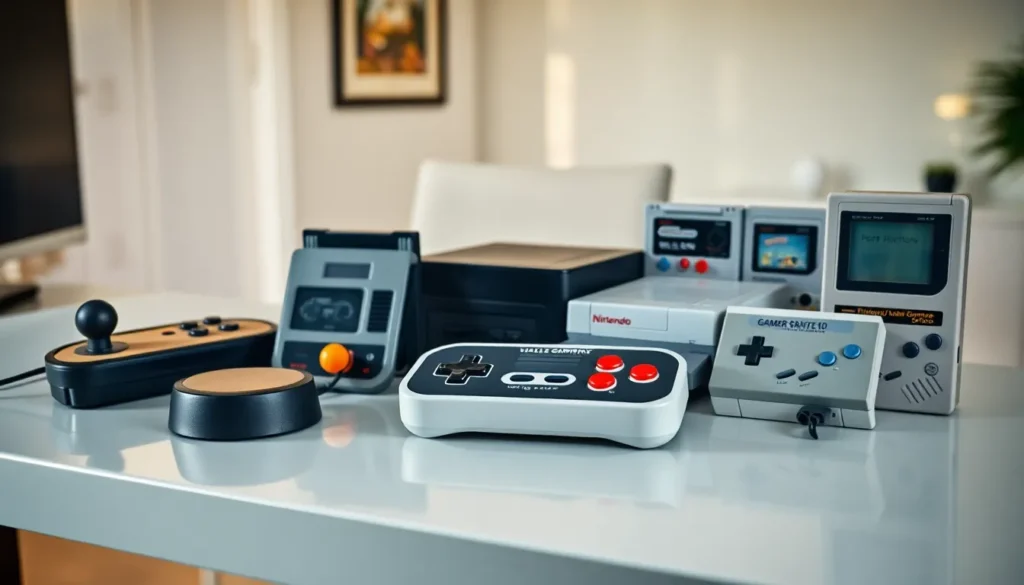
ToggleRetro gaming examples remind players why video games became a global phenomenon. From pixelated sprites to chiptune soundtracks, these classic titles shaped the industry and created memories that last decades. Whether someone grew up feeding quarters into arcade machines or blowing dust out of cartridges, retro games hold a special place in gaming history.
This article explores the most influential retro gaming examples across arcades, home consoles, and handheld devices. Each category features titles that set standards, broke records, and inspired generations of developers. These games prove that great gameplay never goes out of style.
Key Takeaways
- Retro gaming examples span arcades, home consoles, and handhelds, featuring classics released primarily before the year 2000.
- Arcade hits like Pac-Man, Space Invaders, and Donkey Kong established foundational gameplay mechanics still used in modern games.
- Console classics such as Super Mario Bros., Sonic the Hedgehog, and The Legend of Zelda created franchises that remain popular decades later.
- Handheld retro gaming examples like Tetris and Pokémon Red and Blue proved portable systems could deliver deep, addictive experiences.
- These retro games are valued for their nostalgia, historical importance, and influence on game design—proving great gameplay never goes out of style.
What Defines Retro Gaming
Retro gaming refers to playing or collecting video games from previous generations. Most enthusiasts consider games released before the year 2000 as retro, though some extend this to early 2000s titles. The definition shifts over time as newer systems age into “classic” status.
Several characteristics define retro gaming examples:
- Pixel-based graphics: Early hardware limitations required developers to create art using limited pixels and color palettes
- Cartridge or disc media: Physical game storage was standard before digital downloads existed
- Simpler controls: Most retro games used directional pads and a few buttons
- Arcade-style gameplay: Many titles focused on high scores and short play sessions
Retro gaming also carries cultural significance. These games introduced mechanics that modern titles still use. The platforming in Super Mario Bros., the exploration in The Legend of Zelda, and the fighting systems in Street Fighter II all became templates for future games.
Collectors value retro gaming examples for their nostalgia and historical importance. Original hardware, complete-in-box games, and rare variants can fetch thousands of dollars at auction. The retro gaming community continues to grow as players seek authentic experiences from gaming’s formative years.
Iconic Arcade Games
Arcade games represent some of the purest retro gaming examples. These coin-operated machines dominated entertainment venues throughout the 1970s and 1980s. Their influence on game design remains visible today.
Pac-Man (1980)
Pac-Man changed arcade gaming forever. Namco released this maze chase game in Japan, and it quickly spread worldwide. Players guide Pac-Man through a maze, eating dots while avoiding four colorful ghosts. The game introduced power-ups through the iconic “Power Pellets” that let players turn the tables on their pursuers.
Pac-Man generated over $2.5 billion in quarters during its peak years. It spawned merchandise, a TV show, and countless sequels. This remains one of the most recognizable retro gaming examples in history.
Space Invaders (1978)
Taito’s Space Invaders established the shoot-em-up genre. Players control a laser cannon at the bottom of the screen and shoot descending alien rows. The game increases speed as fewer enemies remain, creating escalating tension.
Space Invaders caused a coin shortage in Japan due to its popularity. It proved that video games could be mainstream entertainment, not just novelty attractions.
Donkey Kong (1981)
Nintendo’s Donkey Kong introduced two gaming icons: Mario (originally called Jumpman) and the titular ape. Players climb platforms, jump over barrels, and rescue a captured princess. This game pioneered the platformer genre and launched Nintendo’s dominance in gaming.
These arcade retro gaming examples demonstrate how simple concepts with tight execution create timeless experiences. Modern arcade bars and home arcade cabinets keep these classics alive for new audiences.
Memorable Console Classics
Home consoles brought retro gaming examples into living rooms worldwide. The Nintendo Entertainment System, Sega Genesis, and Super Nintendo defined this era with unforgettable titles.
Super Mario Bros. (1985)
Super Mario Bros. saved the North American video game industry after the 1983 crash. Nintendo packed this side-scrolling platformer with the NES, and it sold over 40 million copies. Players guide Mario through eight worlds, stomping enemies and collecting mushrooms.
The game’s level design remains studied by developers today. Each world introduces new challenges while teaching players through gameplay rather than tutorials. Super Mario Bros. stands as one of the most important retro gaming examples ever created.
Sonic the Hedgehog (1991)
Sega needed a mascot to compete with Mario. Sonic delivered speed, attitude, and groundbreaking level design. The blue hedgehog races through loops, springs, and ramps while collecting golden rings.
Sonic established Sega as a serious competitor to Nintendo. The “console wars” between these companies pushed both to create better games and hardware. This rivalry produced many beloved retro gaming examples throughout the 1990s.
The Legend of Zelda (1986)
The Legend of Zelda introduced open-world exploration to consoles. Players control Link through a vast overworld filled with dungeons, secrets, and items. The game offered non-linear progression, players could tackle challenges in various orders.
Zelda pioneered the action-adventure genre and battery-backed saves for home consoles. Its influence appears in countless modern games, from Dark Souls to Breath of the Wild. These retro gaming examples from home consoles created franchises that continue generating new entries decades later.
Handheld Gaming Favorites
Portable systems delivered retro gaming examples anywhere players traveled. Nintendo’s Game Boy dominated this market, though other handhelds contributed memorable titles.
Tetris (1989)
Tetris launched alongside the original Game Boy and became inseparable from the device. Players rotate falling blocks to create complete horizontal lines. The concept sounds simple, but Tetris offers infinite depth and challenge.
Originally created by Soviet programmer Alexey Pajitnov, Tetris became one of the best-selling games ever made. Its addictive gameplay proves that retro gaming examples don’t need fancy graphics to captivate players.
Pokémon Red and Blue (1996)
Pokémon Red and Blue transformed handheld gaming. Players capture, train, and battle creatures across the Kanto region. The games encouraged social interaction through trading and battling via link cables.
Pokémon spawned an empire including cards, anime, movies, and merchandise. The franchise remains one of the highest-grossing media properties in history. These Game Boy titles rank among the most influential retro gaming examples for portable systems.
Metroid II: Return of Samus (1991)
Metroid II brought atmospheric exploration to the Game Boy. Players guide bounty hunter Samus Aran through an alien planet, hunting Metroids and gaining new abilities. The game maintained the series’ isolation and tension even though hardware limitations.
Handheld retro gaming examples proved that portable systems could deliver deep, memorable experiences. The Game Boy’s library influenced Nintendo’s continued success in portable gaming through the DS and Switch.


