
Table of Contents
ToggleRetro gaming has become a cultural phenomenon that connects generations of players. Millions of people return to classic video games from the 1970s, 1980s, and 1990s each year. Some chase nostalgia. Others discover these titles for the first time.
This guide covers everything about retro gaming culture. It explains what qualifies as retro, why these games stay popular, and how to start playing today. Whether someone owns an original NES or has never held a cartridge, this article provides a clear path into classic gaming.
Key Takeaways
- Retro gaming includes video games and consoles from the 1970s through early 2000s, typically following a 15-to-20-year threshold.
- Classic games remain popular due to nostalgia, focused game design, accessibility, and thriving collector communities.
- You can experience retro gaming through original hardware, mini consoles, emulation, digital storefronts, or portable handhelds.
- Start your collection by focusing on games you genuinely want to play rather than chasing every rare title.
- Research prices using tools like PriceCharting and learn to spot counterfeit cartridges before making purchases.
- Proper storage and maintenance help preserve your retro gaming hardware and software for years to come.
What Defines Retro Gaming
Retro gaming refers to playing video games from previous hardware generations. Most people consider games from the 1970s through the early 2000s as retro. The exact cutoff sparks debate among enthusiasts.
A common rule uses a 15-to-20-year threshold. By this standard, games released before 2005 qualify as retro gaming titles today. This includes the PlayStation 2, original Xbox, and GameCube eras.
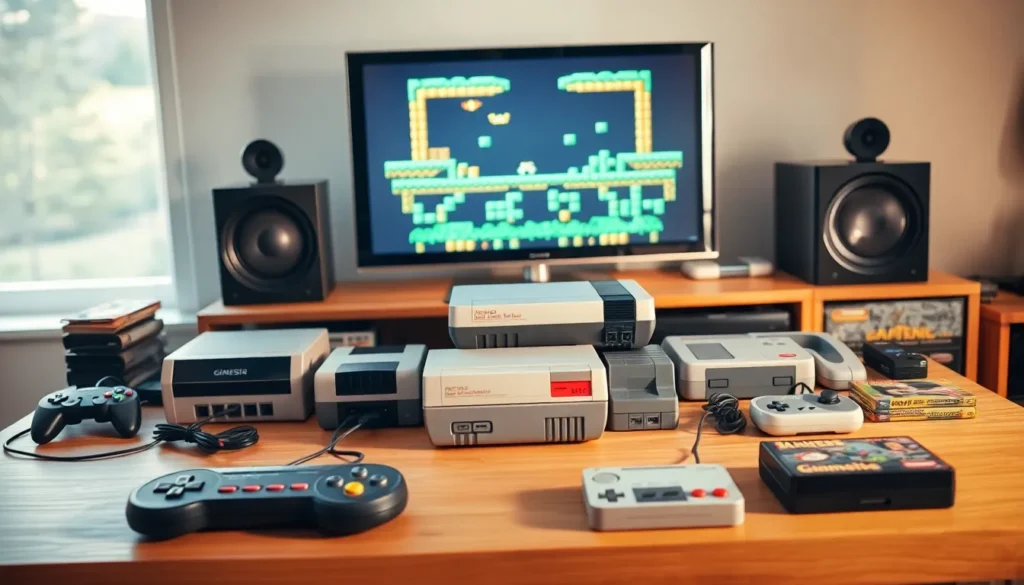
Hardware defines retro gaming as much as software does. Consoles like the Atari 2600, Nintendo Entertainment System, Sega Genesis, and Super Nintendo represent the core of retro gaming history. Arcade cabinets and early PC games also fall into this category.
Key Characteristics of Retro Games
Retro games share several traits that separate them from modern releases:
- Pixel art graphics: Most retro games use 2D sprites rather than 3D models
- Simpler controls: Gameplay often requires fewer buttons and inputs
- High difficulty: Many classic titles punish mistakes harshly
- Limited saves: Password systems and checkpoint-only saves were standard
- Local multiplayer: Online play was rare or nonexistent
These characteristics create a distinct experience. Retro gaming offers gameplay that feels different from today’s open-world adventures and live-service titles.
Why Retro Games Remain Popular Today
Retro gaming continues to grow even though competition from modern titles. Several factors drive this lasting appeal.
Nostalgia and Emotional Connection
Many players associate retro games with childhood memories. The music, visuals, and gameplay trigger powerful emotional responses. A person who played Super Mario Bros. 3 at age eight experiences something different than someone playing it for the first time at thirty.
Nostalgia alone doesn’t explain the trend, though. Younger players discover retro gaming without any prior connection. They respond to the games themselves.
Focused Game Design
Retro games often present clear objectives and tight mechanics. Players know what to do immediately. There are no tutorials lasting several hours or menus requiring extensive study.
The limitations of older hardware forced developers to innovate within constraints. This pressure produced creative solutions that still hold up. Games like Tetris, Pac-Man, and The Legend of Zelda demonstrate timeless design principles.
Accessibility and Low Barriers
Retro gaming doesn’t require expensive equipment or constant internet connections. Many classic titles run on inexpensive hardware. A player can finish a retro game in one sitting, something increasingly rare with modern releases.
Community and Collecting Culture
Retro gaming has built strong communities around preservation, speedrunning, and collecting. Events like Games Done Quick showcase classic titles to millions of viewers. Collectors hunt for rare cartridges and complete sets. This social element keeps interest alive.
Best Ways to Experience Classic Games
Several options exist for anyone wanting to start retro gaming. Each approach has advantages and trade-offs.
Original Hardware
Playing on original consoles offers the most authentic retro gaming experience. CRT televisions display these games as developers intended. The feel of original controllers matters to many enthusiasts.
Drawbacks include cost and maintenance. Vintage hardware fails over time. Capacitors leak. Cartridge contacts corrode. Some consoles become expensive as supply decreases.
Mini Consoles and Re-Releases
Companies like Nintendo, Sega, and Sony have released miniature versions of classic consoles. The NES Classic Edition, Sega Genesis Mini, and PlayStation Classic come preloaded with games. These devices offer convenience at reasonable prices.
Mini consoles use emulation rather than original hardware. Purists notice differences in timing and display output. For casual retro gaming, these differences rarely matter.
Emulation on Modern Devices
Emulators run retro games on computers, phones, and dedicated devices like the Analogue Pocket or MiSTer FPGA. Software emulation ranges from free programs to premium solutions with high accuracy.
Legal considerations apply here. Downloading games someone doesn’t own raises copyright issues. Many players use emulation alongside physical collections.
Digital Storefronts
Nintendo Switch Online, PlayStation Store, and Steam sell classic games legally. These services provide easy access without hardware concerns. Game selection varies by platform, and availability changes as licenses expire.
Retro Gaming Handhelds
Portable devices like the Anbernic RG35XX and Miyoo Mini have created a new market. These handhelds run emulation software and accept game files. They let players enjoy retro gaming anywhere.
Building Your Retro Gaming Collection
Starting a retro gaming collection requires some planning. Prices vary wildly based on rarity, condition, and current trends.
Start with What You Know
Beginners should focus on consoles and games they actually want to play. Collecting every variant of every release leads to burnout and overspending. A focused collection of twenty beloved games beats a random pile of hundreds.
Research Before Buying
Prices for retro games fluctuate constantly. Sites like PriceCharting track market values across platforms. Checking recent sales prevents overpaying. Condition matters significantly, a complete-in-box game commands much higher prices than a loose cartridge.
Where to Find Games
Retro gaming inventory appears in several places:
- Local game stores: Often test and clean games before sale
- Thrift stores and garage sales: Occasionally produce incredible finds at low prices
- Online marketplaces: eBay, Mercari, and Facebook Marketplace offer wide selection
- Retro gaming conventions: Allow inspection before purchase and community interaction
Beware of reproductions and counterfeits. Some sellers pass off fake cartridges as originals. Learning to spot fakes protects against expensive mistakes.
Preservation Matters
Proper storage extends the life of retro gaming hardware and software. Keep cartridges clean and dry. Store discs in cases away from sunlight. Battery-backed save cartridges may need replacement cells every decade or so.


